
In this article, we explore what 15-minute cities are, their main characteristics, why this concept is connected to the evolution of Flex Living, and how this model naturally integrates into Kategora’s value proposition
In recent years, the way we conceive and inhabit cities has been changing. Concepts such as the “15-minute city” have gained prominence in the urban planning of major capitals, focusing on something essential: living better, closer to everything, and with less time lost in commuting. And if this logic is attractive for those who live in a city, it is equally appealing for those who stay there temporarily.
This approach is directly aligned with how Kategora understands urban development and its commitment to Flex Living: highly strategic, well-connected, sustainable projects designed to adapt to the changing housing needs of our society, offering short-, medium-, and long-term stays.
What Are 15-Minute Cities?
The concept of the “15-minute city” was developed by urban planner Carlos Moreno in 2016. It proposes an urban model where essential services — work, sports, culture, healthcare, shopping, leisure, and green spaces — are located within a 15-minute walk or bike ride from one’s accommodation.
The goal is to create more functional, accessible, and human-centered urban environments, where people can meet most of their daily needs without relying on cars or long commutes.
This model not only improves quality of life, but also:
- Reduces traffic congestion and CO₂ emissions.
- Encourages physical activity and healthier lifestyles.
- Strengthens local economies and neighborhood life.
- Fosters more connected and active communities.
Connection with Flex Living and Accommodation Projects
The Flex Living model shares the same underlying logic as the 15-minute city: adapting the urban experience to new mobility patterns, time efficiency, and functionality. Both approaches place citizens at the center, prioritizing day-to-day efficiency.
In a city where essential services are within short distances, accommodation is no longer just a “temporary stop” but an extension of one’s lifestyle: spaces that allow people to work, rest, socialize, and move easily — reducing unnecessary travel and improving work-life balance.
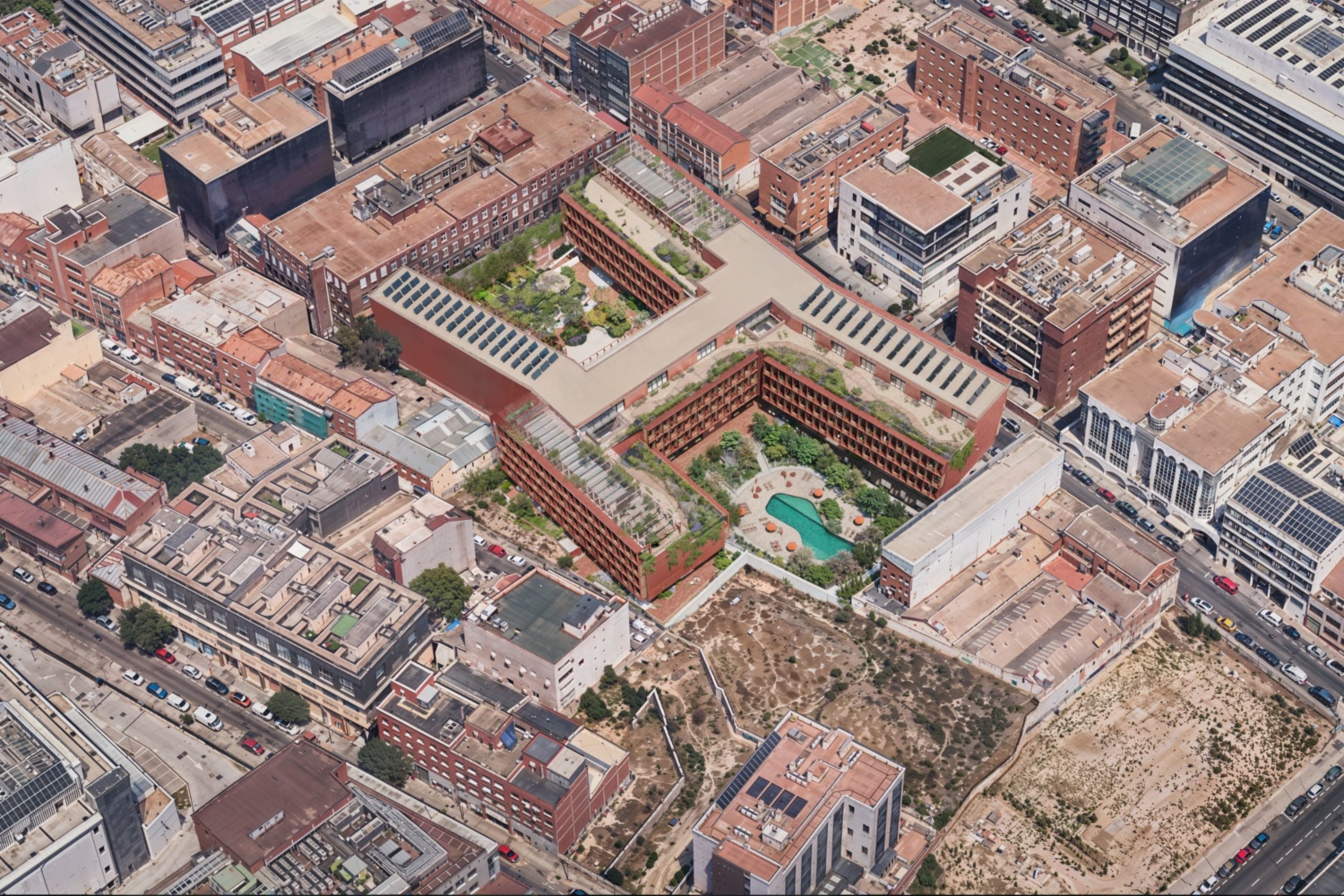
Kategora’s projects are located in growing neighborhoods and strategic areas close to business districts, economic hubs, and transport nodes. Examples such as Kora Lumen in Madrid (MADBIT) or Kora Sant Adrià (Barcelona) demonstrate how it is possible to live near economic centers without being in the historic city center.
In addition, complexes located in Barcelona, Madrid, Valencia, Vitoria-Gasteiz, and Málaga promote a more sustainable and functional lifestyle: encouraging active mobility and public transport, optimizing urban land use, and prioritizing sustainable accommodation designed to coexist with the surrounding environment and each city’s dynamics.
Flex living also enables:
- Short-, mid-, and flexible stays.
- Efficient housing solutions.
- A more sustainable lifestyle and greater professional mobility.
Key Characteristics of 15-Minute Cities
15-minute cities and neighborhoods share common elements aimed at improving residents’ daily lives. While implementation may vary depending on local planning, they all seek to integrate services, mobility, and sustainability.
This approach aligns organically with Kategora’s Flex model, especially in projects located in dynamic, well-connected neighborhoods designed around people.
Immediate Access to Essential Services
In a 15-minute neighborhood, retail, restaurants, educational centers, sports facilities, and workspaces are just steps away.
Kategora Oceanika (Torremolinos), for example, is located opposite the commuter train station, just a few minutes from the centre of Malaga and its international airport, and a stone’s throw from the beach.
This approach responds to investors seeking hotel or serviced apartment opportunities in strategic locations, where proximity translates into high occupancy and strong returns.
Smart and Well-Planned Urban Density
Far from uncontrolled expansion, the 15-minute city promotes well-planned density. This supports mixed-use models where accommodation, services, and shared spaces coexist.
Such environments encourage innovative accommodation models where different user profiles and uses interact — an approach aligned with Kategora’s projects, which integrate accommodation, services, and communal spaces within the same ecosystem.
Active Mobility at the Core of Urban Design
Streets designed for people, safe bike lanes, pedestrian zones, and traffic-calming measures promote walking and cycling.
This model reinforces a more conscious and healthy lifestyle — one of the core values of the Flex Living experience. Kategora selects locations with excellent connectivity, allowing guests in complexes operated under its hotel brand, Kora Living, to move around without relying on cars — a key advantage for flexible and mobile professionals.
Efficient and Well-Connected Public Transport
Although proximity reduces long journeys, these cities offer accessible and sustainable public transport.
Green Spaces Integrated into Daily Life
Urban parks, landscaped squares, and green corridors are part of everyday life, enhancing physical and mental well-being.
This connection with nature is a decisive factor in accommodation choice and is present in many Kategora developments. For example, Kora Green City in Vitoria-Gasteiz includes a public courtyard with bicycle parking, seating areas, and space for cultural activities.
Social Life, Community, and Shared Spaces
Proximity between accommodation and services encourages social life and community spirit. Cafés, squares, markets, and cultural spaces become natural meeting points.
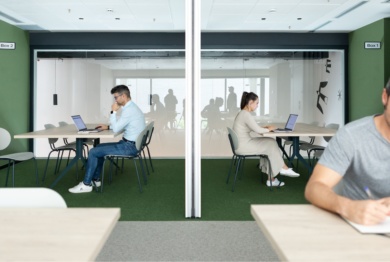
In Flex Living, shared spaces and collective experiences form part of the value proposition, fostering relationships and a sense of belonging. These complexes include coworking areas, communal zones, and gastronomic spaces that encourage interaction. Flex living does not simply provide accommodation — it offers a complete accommodation experience.
Sustainability and Reduced Environmental Impact
15-minute cities prioritize:
- Energy efficiency.
- Renewable energy.
- Emissions reduction.
This commitment aligns with Kategora’s vision of developing sustainable and responsible accommodation designed to minimize environmental impact.
Kategora Oceanika — the largest timber hotel building in Southern Europe — incorporates 3,500 m³ of wood that store 3,500 tons of CO₂ and holds BREEAM certification. Meanwhile, Kora Green City stands out as one of the most energy-efficient accommodations in the world. It holds Passivhaus certification and uses renewable energy systems such as aerothermal, geothermal, and solar energy, generated through 140 m² of photovoltaic panels installed on its rooftop. As a result, 97% of its energy consumption is clean.
Kategora Projects: Flex Living in Strategic Locations
At Kategora, we understand that location is a key factor when developing hotel units and sustainable accommodation capable of generating long-term value. For this reason, our projects, while not located in historic centers, are perfectly connected to the rest of the city and metropolitan area — essential for professionals on the move and temporary stays. Many complexes also feature bike-friendly spaces with dedicated bicycle parking areas.
Currently, Kategora has several projects under commercialization in some of the country’s most dynamic urban markets:
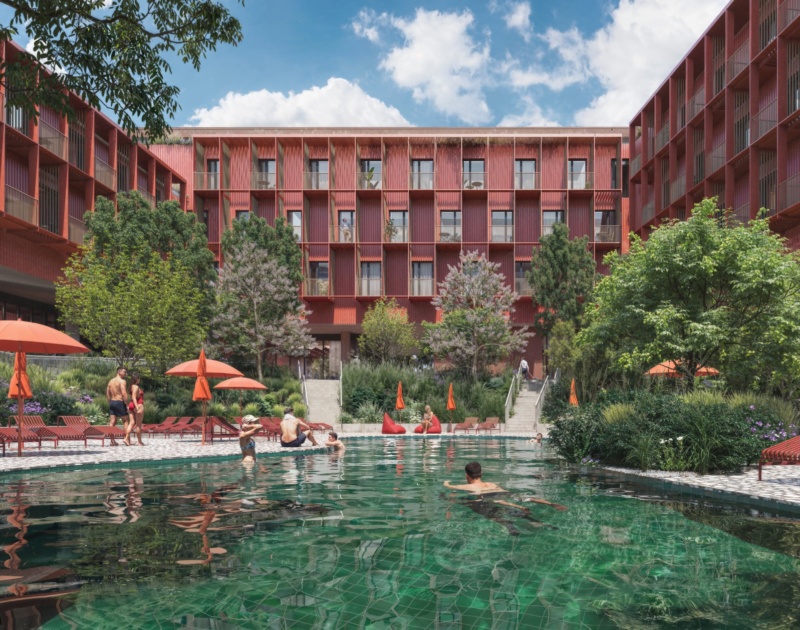
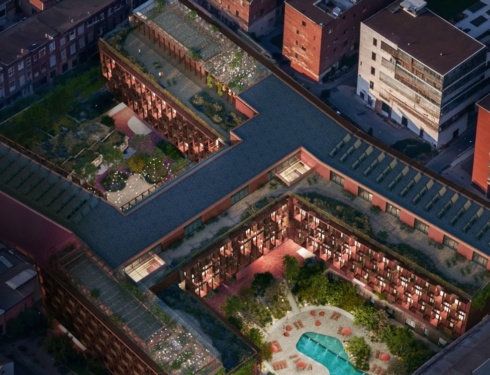
- Kora Sant Adrià, in Sant Adrià de Besòs (Barcelona), is a flex complex integrated into the urban regeneration process of the metropolitan coastline and offers quick connections to the centre of Barcelona.
- Kora Lumen, in Madrid, located in the MADBIT technology district, near IFEMA and the airport, designed to meet the demand for flexible stays in a business and innovation environment.
- Kategora Oceanika, in Torremolinos (Málaga), the largest timber hotel building in Southern Europe combining sustainability, design, and a strategic Costa del Sol location, is strategically positioned minutes from Málaga’s city center, international airport, and the Technology Park — an economic hub that has experienced growth well above the Andalusian (+19) and national (+6) averages in number of companies per 1,000 inhabitants.
- Kora Green City is located in Plaza del Renacimiento, 3 minutes from the railway station and less than 10 minutes from Vitoria-Gasteiz’s Old Town and main attractions.
All share the same vision: offering flexible, well-connected accommodation aligned with more efficient, sustainable, and people-centered urban planning.
These developments are also part of a long-term investment strategy. If you would like to explore current market opportunities further, you can read our analysis on where to invest in 2025, which examines the key trends shaping Spain’s Living and hospitality sectors.
Benefits of Chronourbanism
Chronourbanism is an urban planning approach that places time at the center of city design. While traditional urban planning organized territory according to space (residential, commercial, industrial zones), chronourbanism reorganizes the city based on how long it takes to access essential services. Its objective is to optimize mobility and simplify daily life.
Main benefits:
- Reduces stress: fewer commutes and less traffic.
- Saves time: more hours for leisure and personal life.
- Improves productivity: fewer interruptions.
- Promotes sustainable mobility: reduced car dependency.
- Improves air quality.
- Encourages healthier lifestyles.
- Boosts local economies.
The Future of Urban Planning and Flex Living
Urban planning is evolving toward more human, sustainable, and connected cities. In this context, Flex Living is consolidating itself as a housing solution adapted to these new dynamics.
Kategora: Accommodation Aligned with the Urbanism of the Future
Kategora’s projects integrate the 15-minute city philosophy through strategic locations close to urban centers and perfectly connected to work, leisure, and service areas. This positioning combines accessibility and tranquility, situating hotel units and serviced apartments in dynamic, well-connected environments with strong growth potential.
These complexes are designed to optimize users’ time, facilitate sustainable mobility, and reduce unnecessary travel. Proximity to public transport, business hubs, retail, and cultural facilities is complemented by shared spaces — coworking areas, communal zones, and gastronomic venues — that foster community life and respond to more flexible ways of living. In this way, accommodation becomes more than just a place to sleep: it becomes urban infrastructure integrating work, rest, and social interaction.
In this context, Kategora does not simply offer accommodation or a profitable sustainable investment opportunity: it offers a complete accommodation experience. A model where sustainability, connectivity, and flexibility combine to create modern accommodation environments, prepared for the real needs of cities and aligned with a more efficient way of living and investing in hotels and Flex Living projects.
Frequently asked questions
-
What are the advantages of living in a growing neighborhood rather than the city centerIt allows for better quality of life, strong connectivity, and greater growth potential without the drawbacks of historic centers. Expanding neighborhoods often offer more space, improved infrastructure, and renovated environments while maintaining proximity to city centers and economic activity zones. They also represent attractive opportunities from an investment perspective, as they are located in areas with revaluation potential.
-
Why is flex living ideal for temporary users or digital nomads?Because it combines flexibility, services, and strategic location within a single housing model. Flex living enables short- and mid-term stays in fully equipped accommodation, with shared spaces, coworking, and included services. It is an efficient solution for relocating professionals or digital nomads seeking comfort, community, and strong connectivity without long-term accommodation commitments.
-
How does proximity-based urban planning contribute to sustainability?It reduces commuting, promotes active mobility, and optimizes urban resource use. The 15-minute city reduces car dependency, lowers emissions, and fosters self-sufficient neighborhoods with nearby services. Integrating sustainable accommodation into this urban model contributes to more balanced, efficient development aligned with current environmental needs.
- Fixed yield 4%
- Estimated Fixed + Variable 7%
- Buyer´s use 1 week